Department of Regional, International and Cross-Cultural Studies
I. Orientation and Characteristics of the Department
The Department of Regional, International and Cross-Cultural Studies traces its origins to the Department of British and American Culture, established in June 2005 following a significant restructuring of the former Department of Literature and Culture within the Faculty of English Language and Culture. This reorganization marked a critical evolution in the disciplinary framework, as the Department of British and American Culture emerged from the specialized branch focusing on British and American cultural studies.
In response to the growing prominence of Foreign Language and Literature disciplines and the Ministry of Education’s emphasis on developing new humanities, the Faculty of English Language and Culture actively embraced national strategies for cultivating foreign language talent. To this end, the Department of British and American Culture underwent substantial reform and enhancement. In January and June 2024, following meticulous planning by faculty leadership, the department was officially renamed the Department of Regional, International, and Cross-Cultural Studies. This rebranding thoughtfully aligns with disciplinary development goals while simultaneously articulating the aim of nurturing talent.
The new designation highlights the significance of regional and international studies, as well as the imperative to foster intercultural communication skills. The department seeks to develop a cohort of high-calibre talent with a global perspective and the ability to navigate intercultural communication. This initiative aligns with China’s strategic focus on cultivating foreign-language capabilities, thereby contributing to the training of intercultural communicators in the new era. The department’s strengths are encapsulated in four interrelated features that collectively establish a robust foundation for talent development in regional, international, and cross-cultural studies:
(1) Distinguished Faculty: The department boasts exceptional faculty members, who possess both substantial academic expertise and extensive teaching experience. This combination provides students with a solid educational foundation and a broad research perspective, which are crucial for success in regional, international, and cross-cultural studies.
(2) Integration of Research and Teaching: A strong emphasis on the integration of research and teaching fosters the evolution of the discipline and encourages innovative pedagogical approaches. High-quality research initiatives and teaching achievements create a dynamic environment that fosters innovative talent.
(3) Cohesive Modular Curriculum: The department employs a scientific system of modules characterized by systematic, coherent, and practical content. This curriculum is designed to equip students with essential theoretical knowledge while emphasizing practical application skills, thereby laying a solid groundwork for their future academic and professional pursuits.
(4) Support from National-Level Key Disciplines: The department benefits from robust support from key national disciplines at both the faculty and university levels. This backing provides essential resources and platforms for talent development, ensuring a strong foundation for nurturing exceptional talent. Guided by these key disciplines, the department is committed to innovation in education and the cultivation of graduates with a global vision and intercultural communication proficiency.
II. Objectives and Outcomes
The department is dedicated to cultivating high-quality English majors through a meticulously designed curriculum and practical activities that enhance their English language proficiency, cross-cultural communication skills, and global perspective. Students are expected not only to master specialized theoretical knowledge in regional, international, and cross-cultural studies but also to engage in diverse fields, including cultural exchange, journalism, media, and international politics.
In parallel, the department emphasizes the development of students’ academic capabilities, fostering independent research skills, innovative thinking, and practical experience through rigorous training and a robust academic environment. With the careful guidance of faculty members, students are expected to make significant academic progress, thereby establishing a solid foundation for their future studies and research endeavours.
Ultimately, the department aims to produce high-level talent who will contribute to national development, embody international vision, and possess cross-cultural communication skills. Graduates are expected to play pivotal roles in enhancing the country’s global influence through cultural communication and exchange.
III. Curriculum
The department offers a comprehensive curriculum grounded in a scientifically structured array of specialized teaching modules. This curriculum encompasses core areas such as international and regional studies, intercultural communication, and cultural studies. To address students’ diverse developmental needs, the department offers both core and elective courses. Notably, several specialized modules have achieved recognition as provincial-level quality modules. For instance, “Contemporary American Culture and Society” received accolades as the national-level hybrid online and offline quality course, “Contemporary British Culture and Society” was designated a provincial-level quality course and a provincial-level video resource-sharing course, and “Film Culture” earned the title of provincial-level quality open video course.
To enhance teaching quality and respond to students’ growing learning demands, the teaching team is now working actively in developing an online open module “Intercultural Communication” and creating a virtual simulation experimental platform titled “Intercultural Communication Competence Cultivation”. Focusing on regional, international, and cross-cultural studies, faculty members have meticulously crafted a series of courses aligned with their research strengths, culminating in a scientifically organized professional curriculum.
Through systematic course engagement, students acquire essential skills and methodology for cross-cultural communication, cultivating their international perspective and cross-cultural awareness. Moreover, the department emphasizes practical experiences, supported by specialized courses and internship opportunities. This enables students to engage directly in international exchanges and collaborations, thereby broadening their global outlook and enhancing their practical competencies in cross-cultural communication.
IV. Staff and Teaching and Research Achievements
Current Director: Xu Jingcheng
Previous Directors: Peng Baoliang, Han Rui, Jiao Min, Li Chengtuan
Professors: Ouyang Huhua, Jiao Min, Li Chengtuan
Associate Professors: Han Rui, Huang Qunying
Lecturers: Guo Lan, Hu Zhengmin, Wang Qiong, Xu Jingcheng, Cai Chencen
International Staff: Fred Parker
Professor Emeritus: Zhu Liyi, Zhao Yinong, Zhang Pinggong, Peng Baoliang, Ding Shaoyan, Zhong Hong
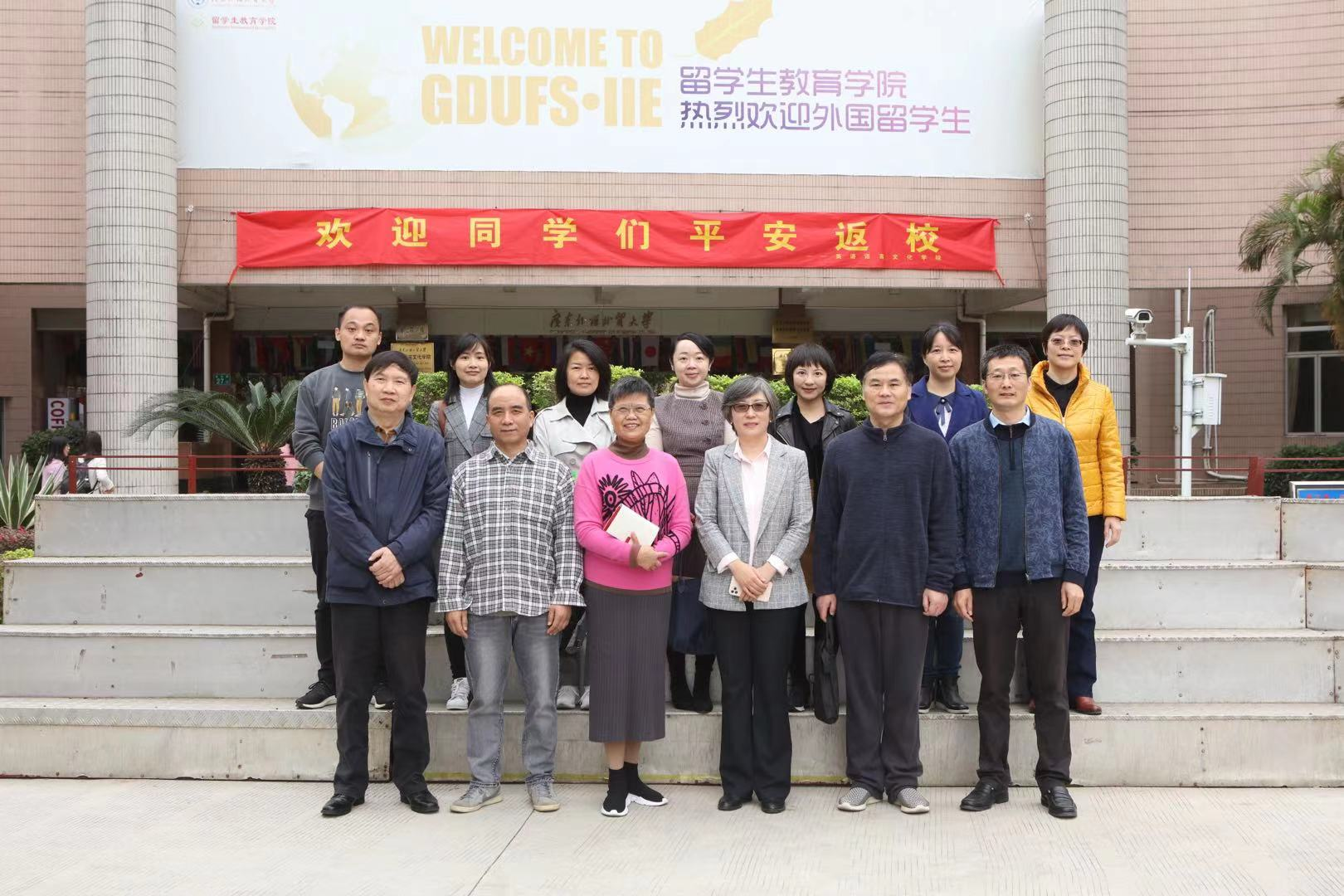
The department is distinguished by its exceptional faculty, who possess profound academic credentials, strong research and innovation capabilities, and extensive teaching experience. This accomplished team includes renowned professors and doctoral supervisors with national and international recognition, as well as scholars returning from abroad who have made significant contributions in their respective fields.
Among the full-time faculty are three professors, two associate professors, five lecturers, and one international educator, all of whom bring valuable experiences from research, further study, and visits outside China. Their expertise enables them to offer students the latest academic insights and practical experiences. Notably, 61% of the faculty hold doctoral degrees, and 54% hold senior academic titles. The department is home to a group of outstanding educators, including four selected for provincial, ministerial, and university-level talent cultivation programs; one outstanding teacher from Guangdong Province; one Yunshan Distinguished Scholar; and one Yunshan Young Scholar.
Faculty members have achieved notable success in teaching and research, actively integrating scientific inquiry with pedagogical practices. Each year, they publish many high-quality teaching and research papers in prominent academic journals both domestically and internationally. Additionally, several staff members are engaged in national, provincial, and ministerial research projects, as well as provincial teaching reform initiatives. They have also authored significant academic monographs, translations, and textbooks published by national-level publishing houses, contributing valuable resources to the academic and educational communities.
Furthermore, the department hosts the “Research on Pragmatic Culture and Identity Construction” team, a key research group in Guangdong Province. This team specializes in analysing cross-cultural communication patterns and exploring innovative teaching practices, thereby advancing research and educational initiatives in China and enhancing cross-cultural communication efforts.
V. Cooperation and Exchange, Employment and Further Studies
The department prioritizes the comprehensive development of its students and encourages their engagement in a variety of clubs and activities organized by both the Faculty and the University. These initiatives encompass professional skills competitions—such as English Drama Night, the English Speech Contest, the Translation Competition, and the Interpreting Competition—designed to enhance students' professional competencies and expressive abilities. Additionally, academic salons and cultural exchanges provide platforms for in-depth discussions on academic issues, thereby broadening students’ cultural perspectives. Volunteer activities foster a sense of social responsibility and a spirit of dedication among participants.
To facilitate in-depth cross-cultural research, department staff would supervise students to investigate cultural adaptation within countries along the Belt and Road Initiative. Building on this foundation, the department encourages students to participate in the “Challenge Cup” National Extracurricular Academic Science and Technological Works Competition for Undergraduates, allowing them to demonstrate their research findings and innovative capabilities.
Currently, the department is pursuing the establishment of a national-level virtual simulation laboratory aimed at cultivating cross-cultural communicative pragmatic competence. This laboratory will definitely offer students a more advanced and realistic platform to enhance their intercultural communication skills.
Moreover, the department emphasizes diverse research fields, including regional and international studies, media discourse, news communication, international political discourse, digital humanities, medical humanities, and environmental humanities. Regular academic research forums and competitions provide students with opportunities to engage with experts and scholars, stimulating their academic enthusiasm and fostering their innovative thinking.
Graduates of the department enjoy promising career prospects. They can leverage their education in government agencies, enterprises, international organizations, and corporations, or pursue further studies at the master's or doctoral level. To support students in career planning and development, the department offers a series of structured professional training, humanistic education, career guidance, internships, and practical training, all designed to facilitate smooth employment and career advancement.
Approximately 65% of graduates secure employment in media, government, international enterprises, state-owned companies, and education, while 35% choose to pursue further studies. Many of these students gain admission to prestigious institutions, including the University of Southern California, the Chinese University of Hong Kong, Lancaster University, the University of Edinburgh, Southwest University, Guangdong University of Foreign Studies, Beijing Foreign Studies University, Columbia University, the University of Maryland, and New York University. The professional placements and academic pursuits of our graduates attest to the high quality of education and the comprehensive competencies developed within the department.
VI. Fundamental Purposes
The department aims to equip students with significant advantages for their future careers through targeted studies and internships in the following areas:
(1) Language Proficiency and Humanities Knowledge: Students should develop strong English language skills and a broad understanding of the humanities, establishing a solid foundation for effective and confident communication across diverse contexts.
(2) Cross-Cultural Communication: Students must acquire the ability to engage appropriately with both native and non-native English speakers in various cultural settings, adapting flexibly to the communicative demands of different cross-cultural interactions.
(3) Chinese Perspectives: Students should develop their contrastive thinking for Chinese and Western cultures to effectively promote Chinese culture and narrate Chinese stories in English.
(4) Global Visions: Students are expected to be well-versed in the political, economic, social, scientific, technological, historical, and cultural realities of English-speaking countries. They should cultivate a global vision and develop cross-cultural collaboration and leadership skills to effectively participate in international exchange and cooperation.
(5) Research Proficiency: Mastery of humanities research methods is essential, along with a sense of innovation and interdisciplinary research capabilities, enabling students to achieve significant breakthroughs in academic fields.